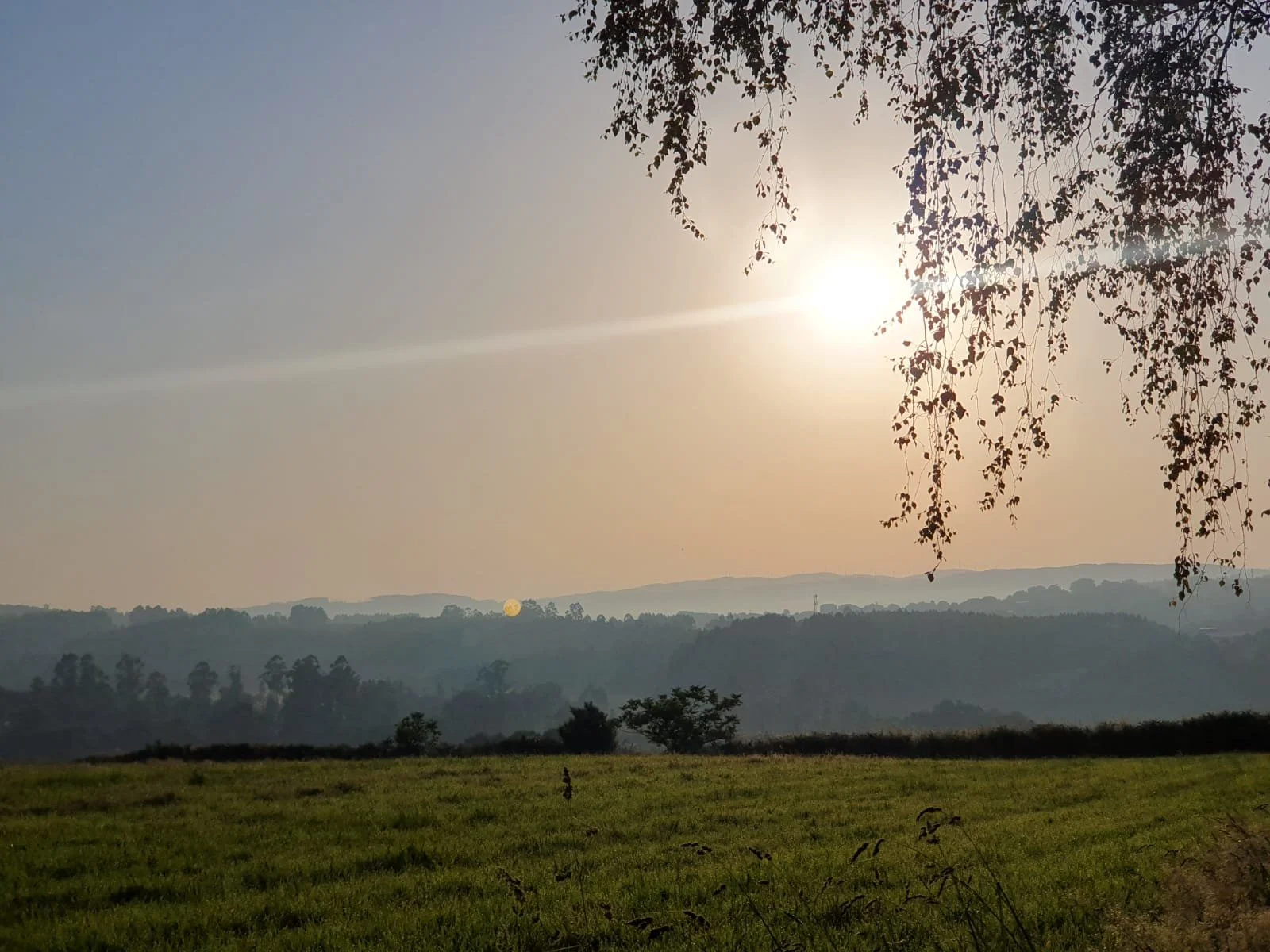
El Camino Inglés
The English way.
Overview
The Camino Inglés is one of the shortest and most accessible Camino routes, traditionally used by pilgrims arriving from England, Ireland, and northern Europe. Today, it offers a practical and well-defined path to Santiago that can be completed in less than a week, making it a popular option for travellers with limited time.
Starting from either Ferrol (118 km) or A Coruña (75 km), the route travels through Galicia’s coastal and inland landscapes, passing small towns, wooded valleys, and historic villages. The Ferrol route meets the minimum distance required to earn the Compostela certificate, while the A Coruña variant is an established historic path recognised with supplementary documentation.
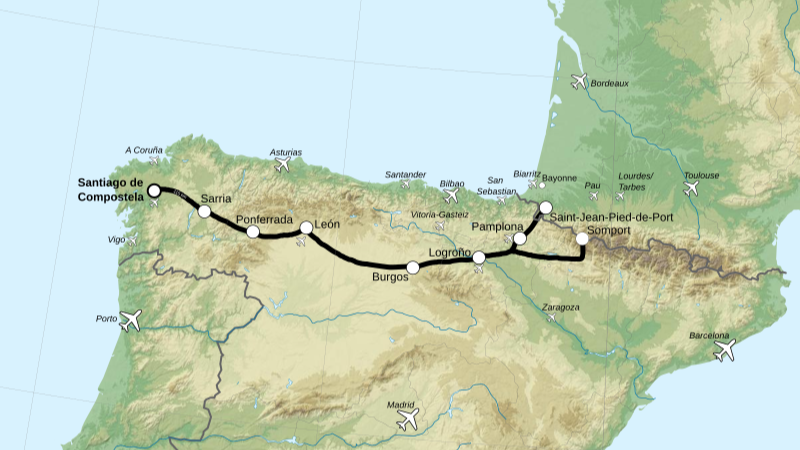
🗺️ Key Facts at a Glance
Total Distance: 118 or 75 km
Historic Starting Point: Ferrol or A Coruña
Ending Point: Santiago de Compostela
Average Duration: 5-6 or 3-4 days
Difficulty: Moderate-hard (long hills, less infrastructure)
Best Season to Walk: April – October
Why Choose the Camino Inglés?
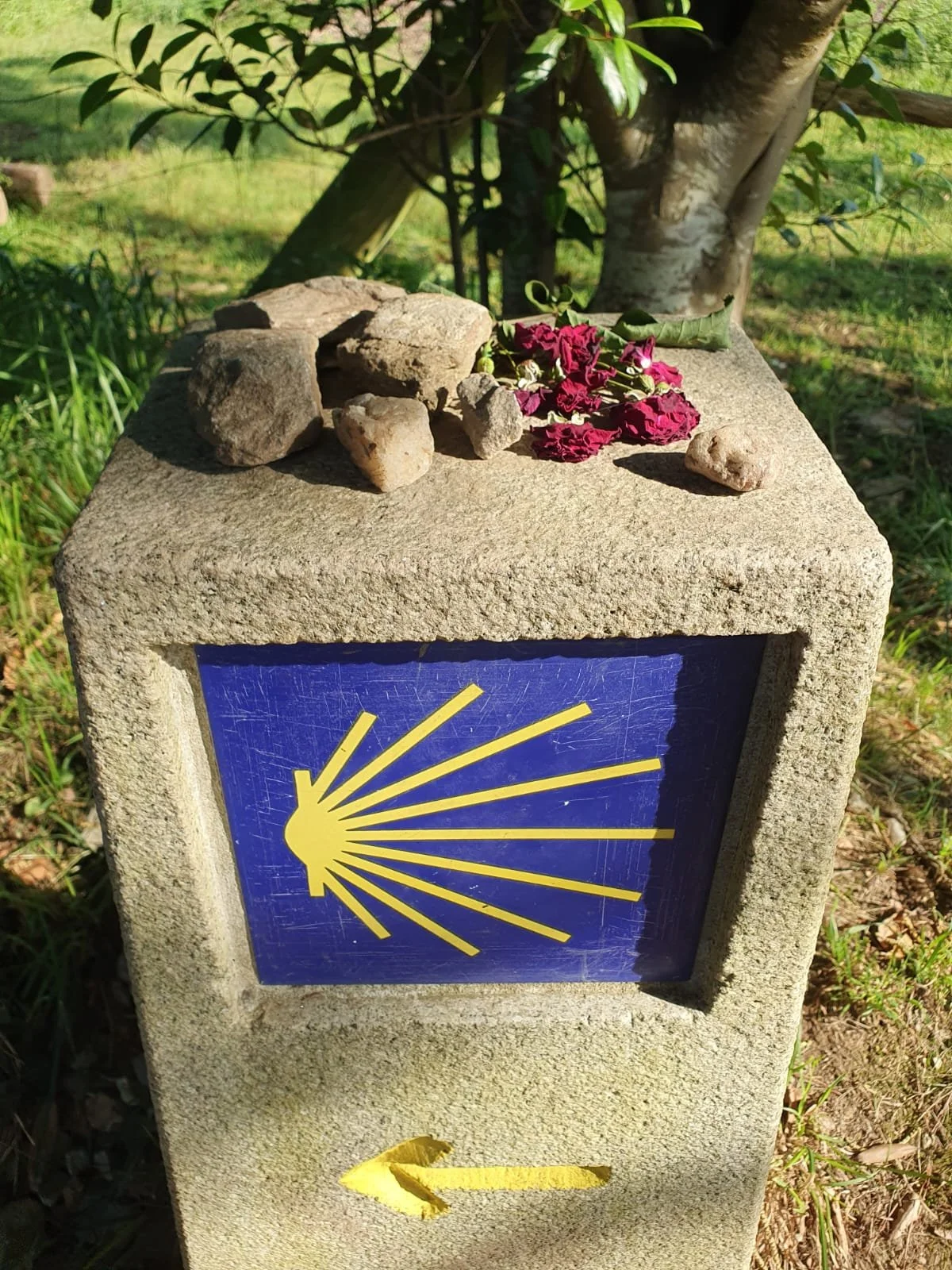
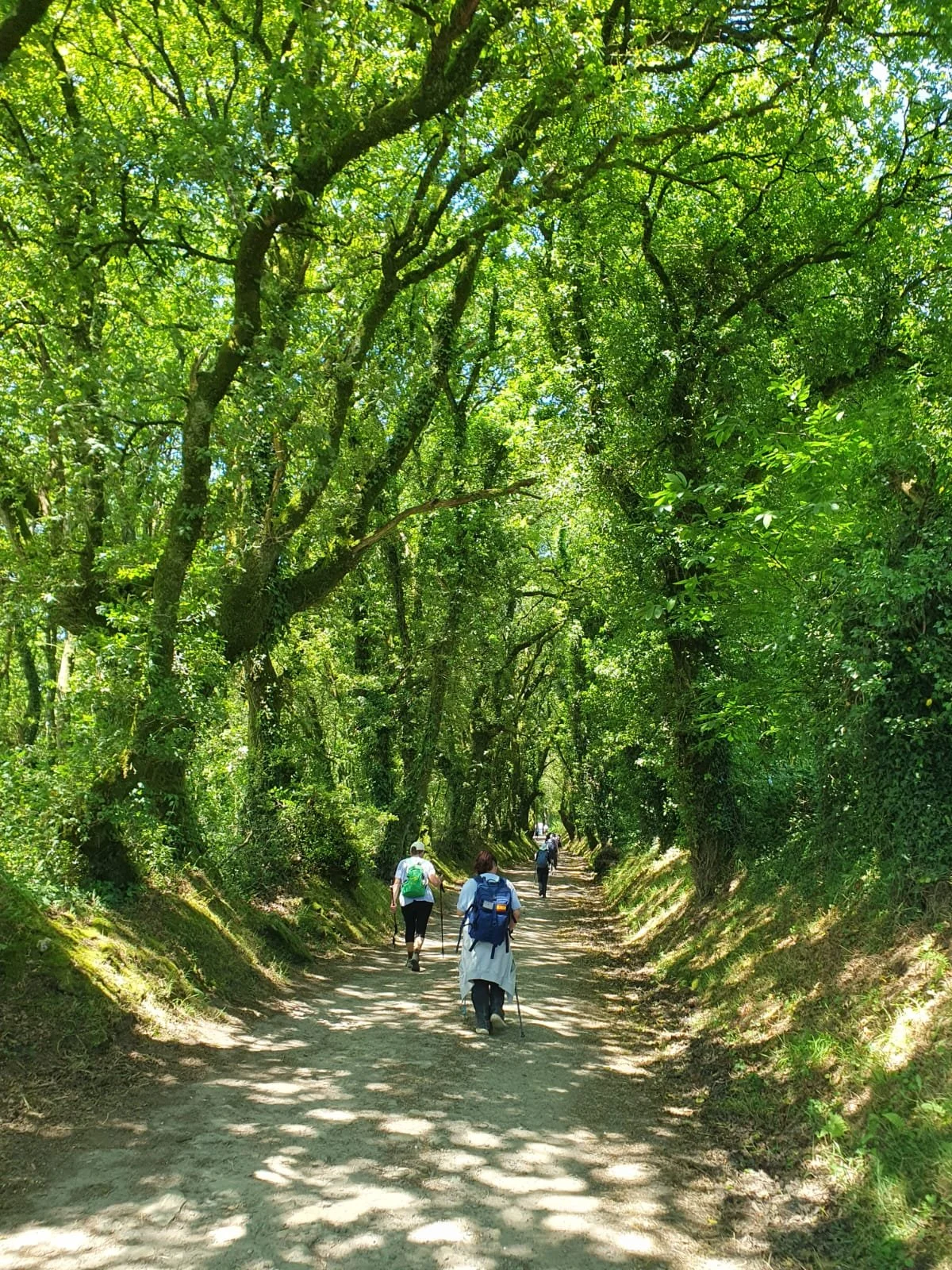
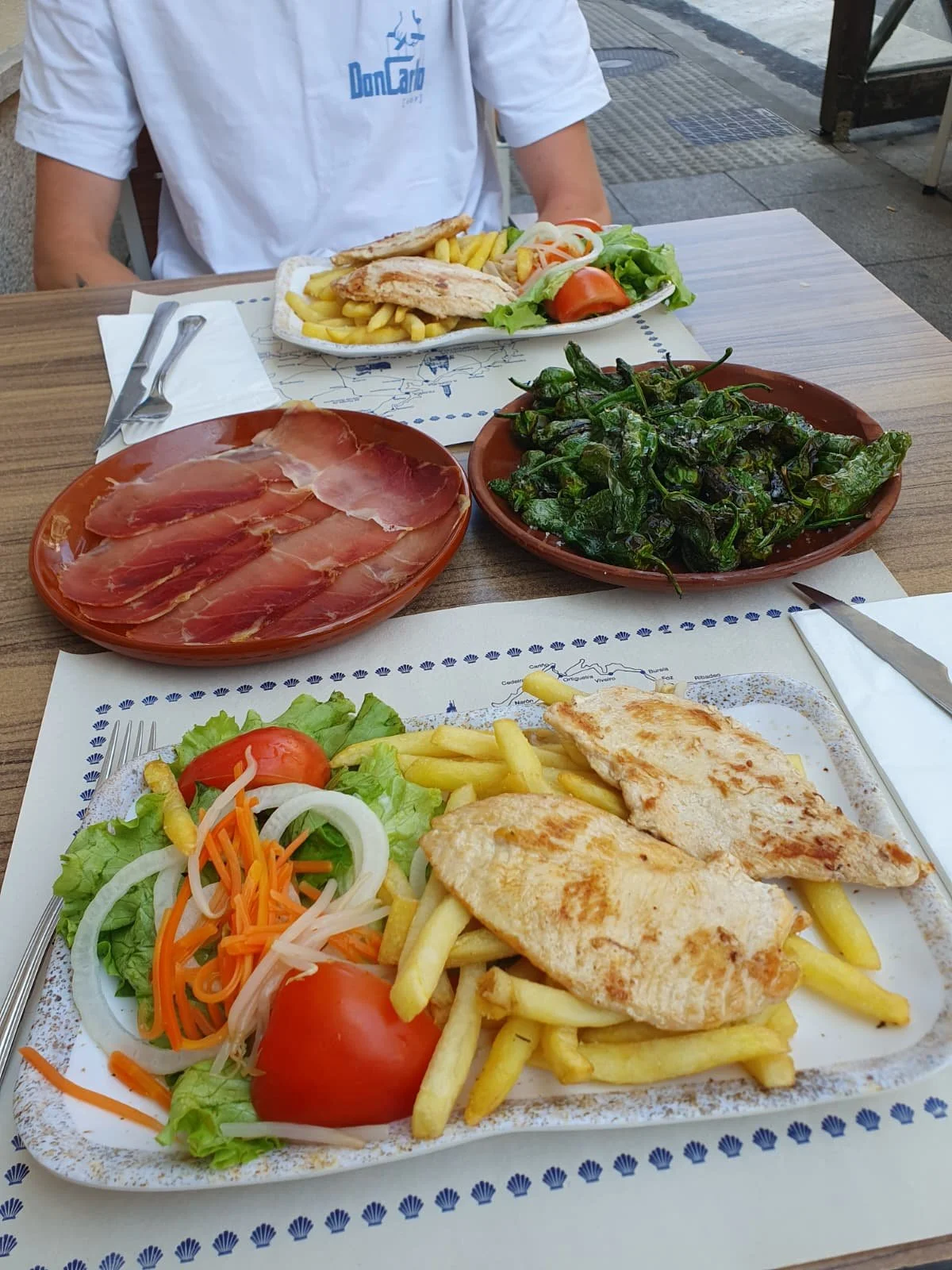
The Camino Inglés is a short, well-structured route ideal for travellers who want to complete a full Camino in under a week. With clear waymarking, moderate terrain and quieter paths, it offers a streamlined Camino experience without the larger crowds found on other routes. The first two days follow Galicia’s northern coastline, past secluded beaches, before climbing into the rolling hills and heading south towards ancient cities like Betanzos with its self-proclaimed ‘best tortilla in Spain’.
It’s ideal for:
Those who prefer quieter paths and shorter daily stages
Returning pilgrims seeking a less-travelled alternative
Travellers who enjoy a harder, quieter and more introspective route
History of the Camino Inglés
The Camino Inglés has its origins in the Middle Ages, when pilgrims from England, Ireland, Scotland, and Scandinavia travelled to Santiago by sea. Instead of crossing France or northern Spain on foot, many chose to sail directly to the Galician ports of Ferrol and A Coruña, which became important entry points for northern European pilgrims.
From the 12th to the 15th centuries, maritime pilgrimage to Santiago grew steadily. Ships arrived carrying groups of pilgrims seeking a faster and safer alternative to overland travel, especially during periods of conflict on the continent. Records from this time note organised pilgrim groups, dedicated ships and even royal and noble travellers using this northern sea route.
After disembarking, pilgrims followed well-established inland paths from Ferrol or A Coruña to Santiago, forming what is now known as the Camino Inglés, “the English Way.” Although usage declined after the Reformation and political changes in northern Europe, the route retained its historic identity.
The Camino Inglés was revitalised in the late 20th and early 21st centuries, with renewed waymarking, infrastructure improvements, and official recognition. Today, it remains one of the most historically distinct routes to Santiago, offering a connection to the centuries-old maritime tradition of pilgrimage from the British Isles and northern Europe.
Highlights Along the Way
Ferrol: A historic port city and the traditional starting point of the Camino Inglés, with naval heritage and a well-marked official trailhead.
Neda: A quiet coastal town known for its riverside views and one of the oldest documented pilgrim hospitals on the route.
Pontedeume: A small town with a medieval centre, notable for its long stone bridge and easy access to the scenic Andrade Tower.
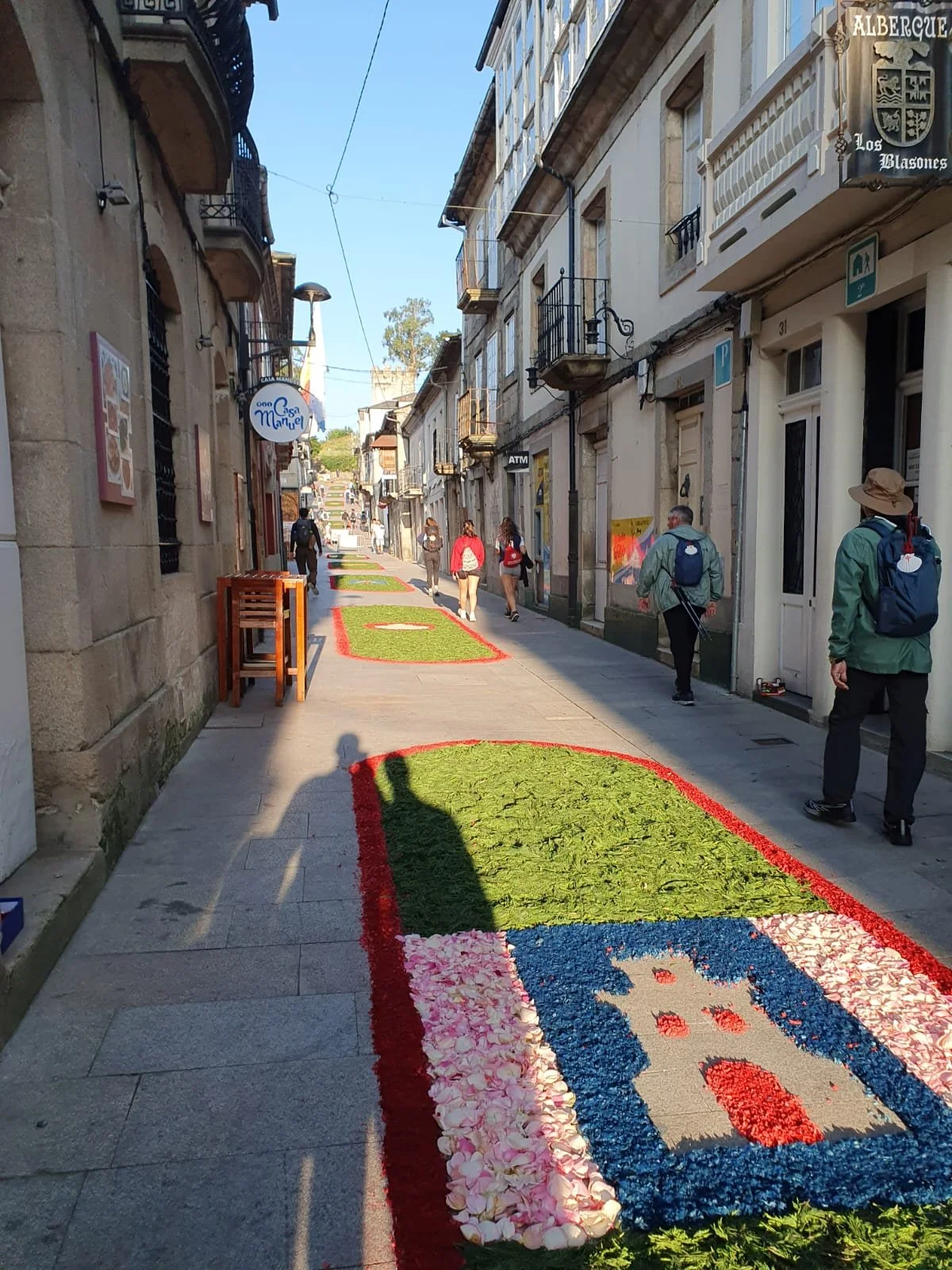
Betanzos: A well-preserved historic town with narrow streets, traditional Galician architecture and ‘the best tortilla in Spain’.
Hospital de Bruma: A rural settlement marking the highest point of the route and home to a long-running pilgrim hostel.
Sigüeiro: A convenient final stop before Santiago with modern services and a straightforward approach into the city.
A Coruña (variant): An optional historic starting point with a shorter route, known for its waterfront promenade and the ancient Tower of Hercules..
Saint-Jean-Pied-de-Port
Pamplona
Elevation Profile
Burgos
Leon
Santiago de Compostela
Sarria

Ferrol vs. A Coruña: Understanding the Two Routes
The Camino Inglés has two recognised starting points: Ferrol and A Coruña. Both are historic maritime routes used by medieval pilgrims arriving by sea from northern Europe, but they differ in distance, structure and how they relate to the Compostela certificate.
Ferrol Route – 118 km (Eligible for the Compostela)
The Ferrol route is the most commonly walked version of the Camino Inglés. At just over 118 km, it meets the minimum distance required to receive the Compostela certificate. It offers well-defined stages, consistent signage, and established pilgrim facilities. This makes it the standard option for travellers wanting to complete the Camino Inglés in a single, recognised journey.
A Coruña Route – 75 km (Requires Additional Pilgrimage Record)
The A Coruña variant is an official historic route, but at 75 km, it does not meet the standard minimum of 100 km required for the Compostela on its own.
Pilgrims starting in A Coruña can still earn the Compostela, but they must show evidence of having completed additional pilgrimage distance elsewhere before arriving in A Coruña.
This can include kilometres walked in your home country along an official Camino route and when combined, these distances must total at least 100 km.
The Camino Inglés in England
Many English pilgrims began their Camino centuries ago by walking from their home region to a local port before sailing to Spain. Today, this tradition continues through informal feeder routes in England, such as the path from Reading to Southampton, which follows historic travel corridors used by medieval pilgrims heading for the south-coast ports. Walkers can collect stamps along the way and use this distance to support a Compostela request when starting the Camino Inglés from A Coruña.
Which Should You Choose?
Choose Ferrol if you want a full, self-contained route that qualifies for the Compostela without additional requirements.
Choose A Coruña if you want a shorter pilgrimage and already have verified kilometres from another official Camino path.
FAQs
Q: How long does it take to walk the Camino Inglés?
A: Most walkers complete the Ferrol route in 5–6 days. The A Coruña variant typically takes 3–4 days.
Q: When is the best time of year to walk the Camino?
A: The best seasons are April–June and September–October. Weather is mild, and services are fully available. July and August are warmer and busier.
Q: Do I need to be very fit to walk it?
A: You don’t need to be super fit, but a reasonable level of fitness helps. The Camino is a long-distance walk, not a race. With some preparation and realistic daily stages, almost anyone can complete it. We recommend building up to walking 15–25 km per day before your trip. The Pyrenees and Galicia are hillier, while the Meseta is mostly flat.
Q: Where do pilgrims stay each night?
A: Accommodation, if you book a package with us, is with friendly, local hotels. We arrange hand-picked accommodation that balances comfort and authenticity — always with a warm welcome at the end of each day’s walk.
Q: Is the Camino Inglés busy?
A: It is one of the quieter official Camino routes, especially outside of summer. You’ll see other pilgrims, but far fewer than on the Camino Francés or Portugués.
Q: Can I have my luggage transferred?
A: Yes — luggage transfer is available along the entire Camino Francés. Your main bag is collected each morning and delivered to your next accommodation, so you only walk with a small daypack. This makes the journey much more comfortable and is included in our Camino packages.
Q: Do I need to speak Spanish?
A: Not necessarily. Knowing a few simple phrases helps, but most accommodation hosts, restaurants, and transport providers are used to pilgrims and speak at least some English. The Camino is well-signed, and gestures, smiles, and “Buen Camino!” go a long way.
Q: What should I pack?
A: Pack light. The essentials include comfortable walking shoes, layered clothing, a rain jacket, and a good backpack. We send all our clients a detailed packing list before departure, so you’ll know exactly what to bring and what to leave behind.
Q: Do I get a certificate at the end?
A: Yes, pilgrims who complete the Ferrol to Santiago route (approximately 118 km) are eligible to receive the Compostela certificate. If you start from A Coruña (75 km), you will need to provide evidence of having walked at least additional 25 km elsewhere to meet the minimum 100 km requirement. This can be from an official camino route in your country of origin, where 2 stamps per day must be collected to prove the walk.
Q: What is the terrain like?
A: The route includes coastal sections, woodland paths, rural tracks, and some paved areas near towns. It has a mix of gentle hills and flat stretches..
Accommodation & Support
On the Camino Inglés you’ll find a range of accommodation — from traditional albergues to comfortable hotels and private rooms.
At Camigo Travel, we take care of all the details:
Hand-picked accommodation
Daily luggage transfers
Route notes and pilgrim passport
24/7 customer support
So you can focus on walking, connecting, and enjoying every step of your Camino.
Start Your Camino Francés Adventure
Whether you dream of walking the entire route or just the final 100km, the Camino Francés is a journey that stays with you for life.
Let us plan your perfect Camino — tailored to your pace, comfort, and purpose.
👉 Start your Camino today and experience the magic of the world’s most famous pilgrimage route.