
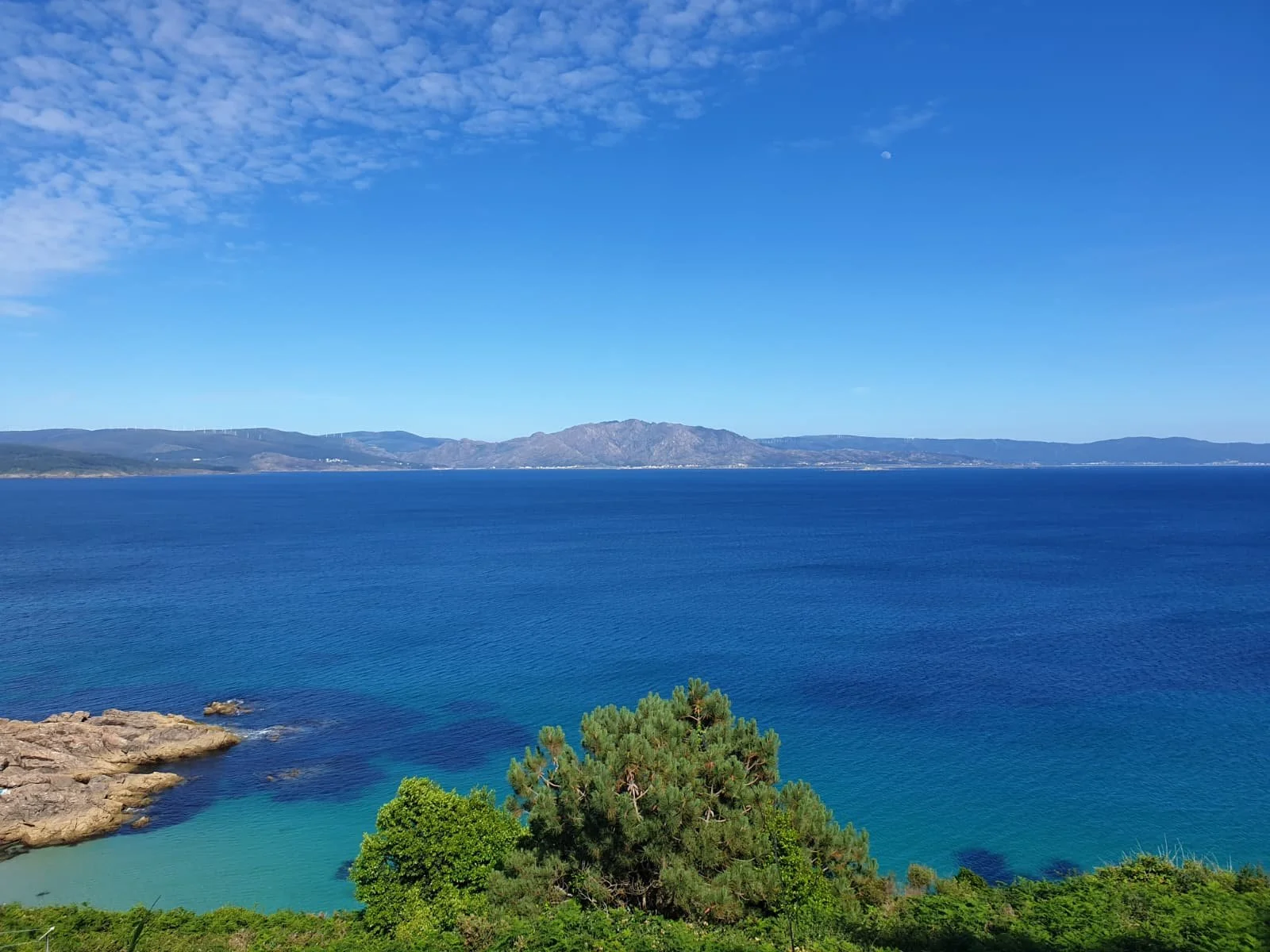
Walk to the end of the world.
El Camino Finisterre
The Camino Finisterre is a unique extension of the Camino de Santiago and the only official route that starts in Santiago rather than ends there. Stretching roughly 90 km from Santiago to Finisterre, with an optional continuation to Muxía, it leads pilgrims through quiet Galician countryside, traditional fishing villages and unspoiled Atlantic coastline.
Unlike other Camino routes focused on reaching the cathedral, the Finisterre route offers a reflective journey beyond Santiago, often seen as a symbolic continuation for those who want time to unwind after completing their main Camino. The path is well-marked, moderately graded and typically walked over 3–4 days, ending at the iconic Cape Finisterre lighthouse, once considered the “end of the known world.”
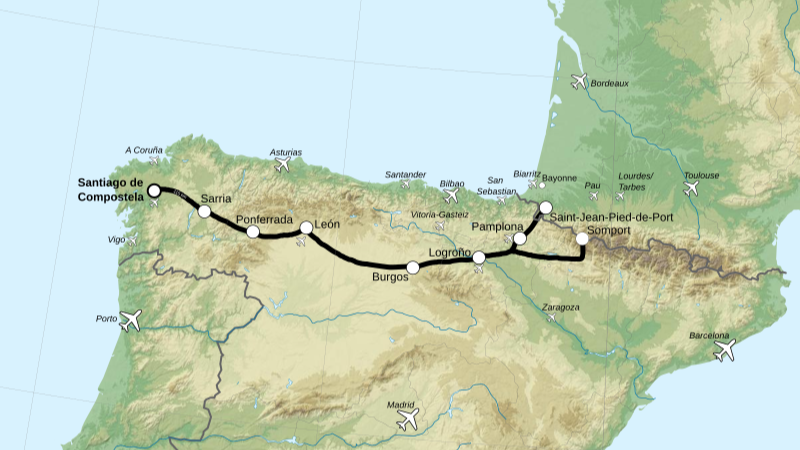
🗺️ Key Facts at a Glance
📏 Total Distance: 90km (Finisterre) 85km (Muxia) 29km (Finisterre to Muxia)
📍 Historic Starting Point: Santiago de Compostela
🌅 Ending Point: Finisterre or Muxia
🗓️ Average Duration: 3-5 days
⛰️ Difficulty: Moderate (rolling terrain with some hill sections)
🌤️ Best Season to Walk: April to October
Why Choose the Camino Finisterre?
If you’re drawn to the idea of walking beyond Santiago, the Camino Finisterre offers a deeply symbolic and reflective journey. Traditionally known as the “end of the world,” this route invites pilgrims to continue their Camino to the Atlantic coast, where land meets sea and many choose to mark the end of their pilgrimage in a meaningful way.
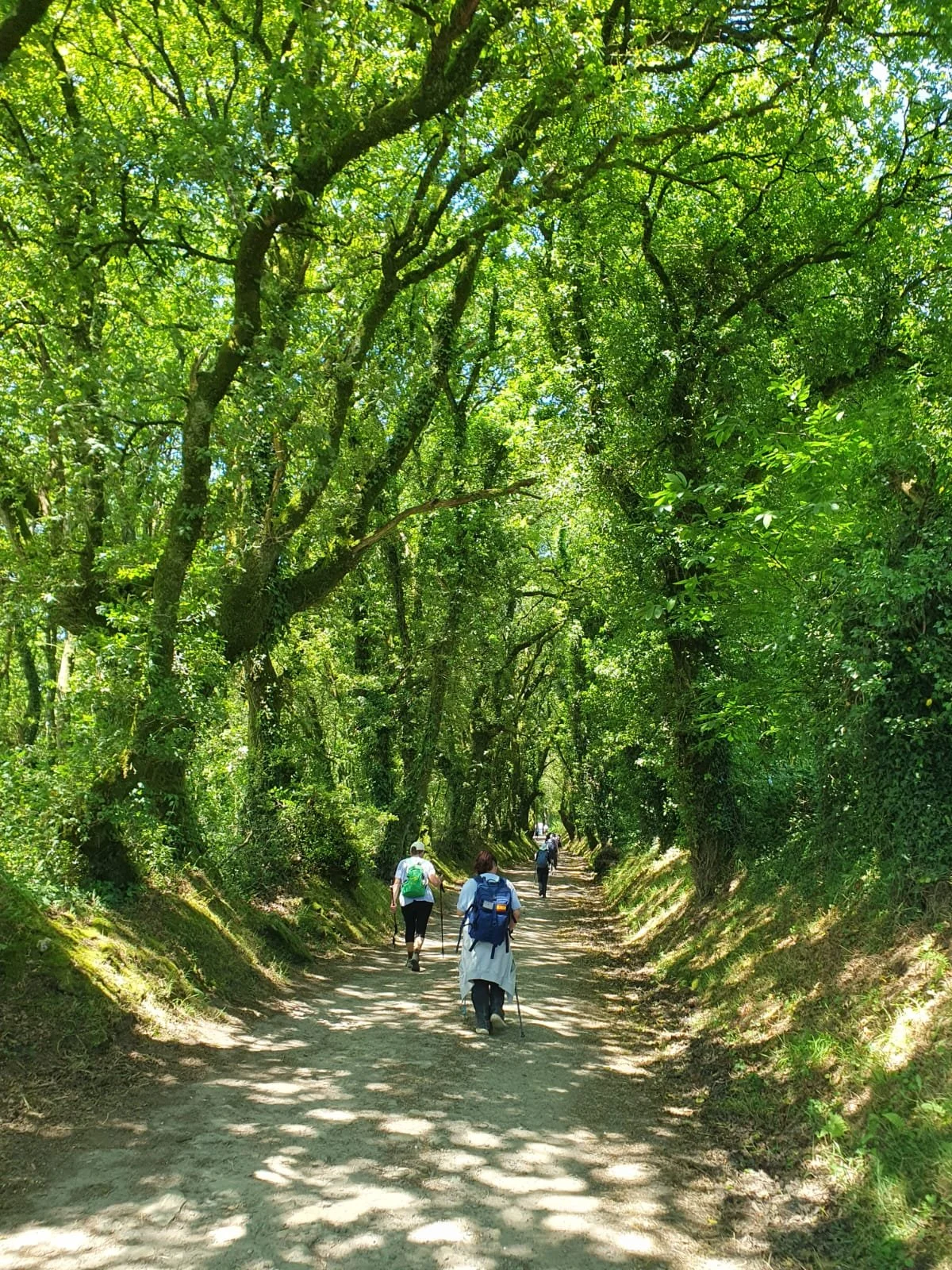
Shorter and quieter than the Camino Francés, the Camino Finisterre passes through peaceful Galician countryside, small villages, and eventually opens out to dramatic coastal landscapes. It’s a Camino shaped by contemplation, simplicity, and a powerful sense of closure — or new beginnings.
It’s ideal for:
Pilgrims who want to continue walking after arriving in Santiago
Those seeking a quieter, more reflective Camino experience
Walkers drawn to rugged coastline, ocean views, and powerful sunsets
Pilgrims looking to mark the end of their Camino in a symbolic way
History of the Camino Finisterre
The Camino Finisterre is one of the most ancient and symbolic routes connected to Santiago de Compostela, with roots that reach back long before the Christian pilgrimage tradition began. Long regarded as the finis terrae — the “end of the world” — this stretch of Atlantic coastline held deep spiritual significance for ancient Celtic and Roman cultures, who believed the sun set into the ocean at the edge of the known world.
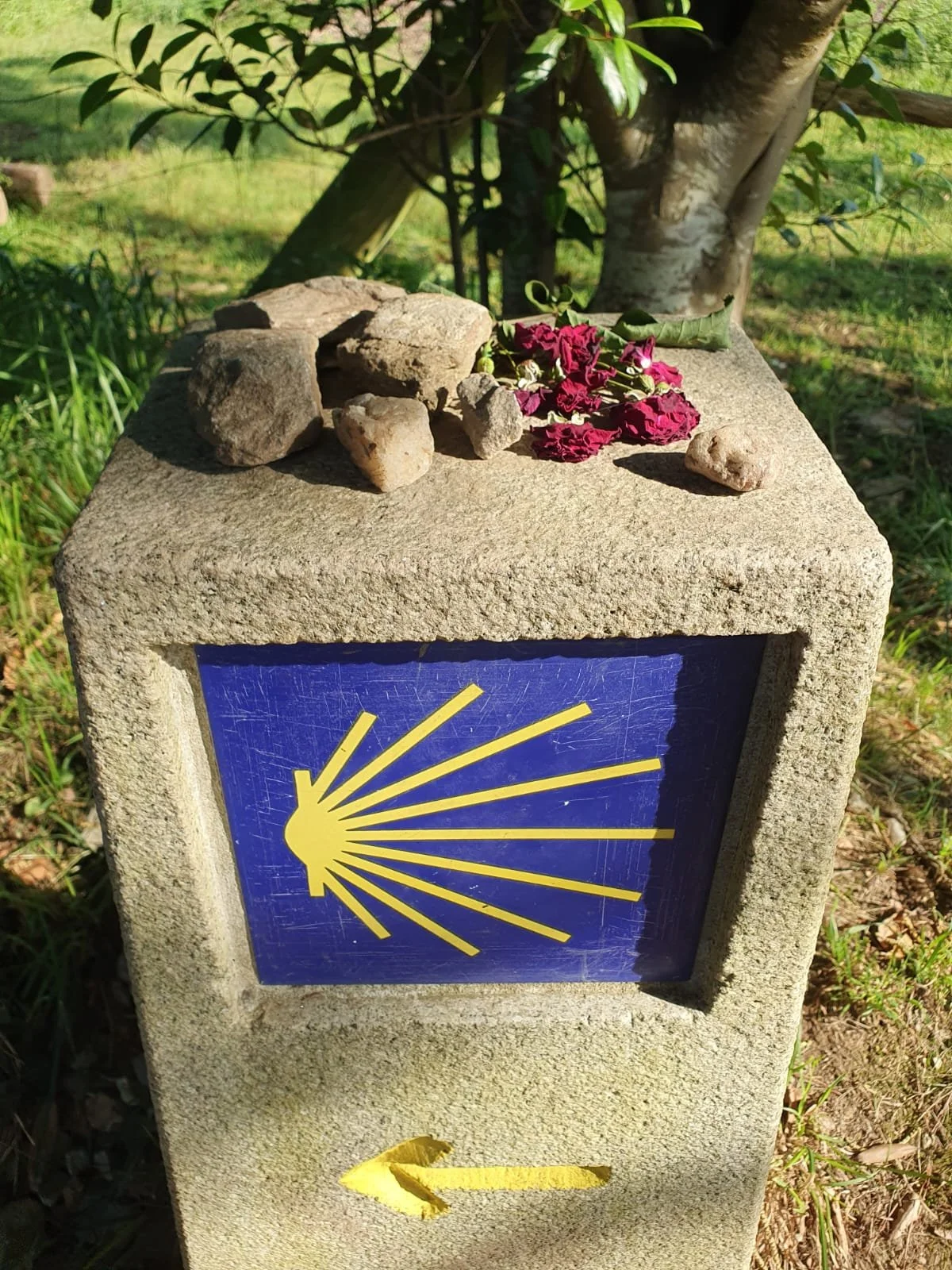
After the discovery of the tomb of St James in the 9th century, pilgrims began travelling to Santiago and then continuing westwards to Finisterre and nearby Muxía. For many, this final walk was an essential part of the pilgrimage — a way to complete the journey through reflection, ritual, and connection with the sea. Medieval pilgrims followed forest paths and coastal tracks, often collecting a scallop shell as proof they had reached the ocean’s edge.
Throughout the Middle Ages, the Camino Finisterre became firmly woven into the wider Camino network. Chapels, churches, and simple shelters were established to support pilgrims as they made their way toward the coast, including the sanctuary at Muxía, where Christian and pre-Christian traditions intertwined.
Like many Camino routes, the Camino Finisterre declined in later centuries due to political upheaval and changing travel patterns. In recent decades, however, it has seen a renewed revival. Waymarkers have been restored, albergues reopened, and the route once again attracts pilgrims seeking not just an arrival in Santiago, but a meaningful ending — or a quiet beginning — at the edge of the Atlantic.
Highlights Along the Way
Negreira: A peaceful Galician town surrounded by rolling countryside, offering a gentle transition from the energy of Santiago into the quieter rhythm of the Finisterre route.
Olveiroa: A small rural village steeped in pilgrimage tradition, where stone houses and open skies create a timeless Camino atmosphere.
Muxía (optional): Home to the Sanctuary of A Virxe da Barca, where Christian and ancient beliefs meet beside the sea — a powerful and windswept place of reflection.
Cee & Corcubión: Twin coastal towns set along a beautiful estuary, combining seaside charm with a strong maritime history.
Cape Finisterre (Fisterra): The dramatic endpoint of the route. Stand at the edge of the Atlantic, watch the sun set over the ocean, and mark the completion of your Camino.
Saint-Jean-Pied-de-Port
Pamplona
Elevation Profile
Burgos
Leon
Santiago de Compostela
Sarria

Walking to Muxía and Finisterre
A common question is whether to walk to Finisterre, Muxía, or both. Each option offers a different ending to the Camino, and the right choice depends on what you’re looking for from the experience.
Walking to Finisterre
Finisterre (Fisterra) is the most well-known extension of the Camino. Historically believed to be the “end of the world,” it offers a powerful sense of closure, particularly at Cape Finisterre, where pilgrims gather to watch the sun set over the Atlantic.
This route is ideal for pilgrims seeking:
A strong symbolic ending to their Camino
Dramatic coastal scenery
A clear, well-marked continuation from Santiago
Walking to Muxía
Muxía offers a quieter, more contemplative ending. Home to the Sanctuary of A Virxe da Barca, this windswept coastal village blends Christian pilgrimage with older Celtic traditions tied to the sea and stone. Many pilgrims describe Muxía as deeply peaceful and emotionally resonant.
This route suits pilgrims who want:
A calmer, less crowded destination
A strong spiritual atmosphere
A connection with ancient traditions and the ocean
Accommodation & Support
On both the full Camino Francés and the final 100km, you’ll find a range of accommodation — from traditional albergues to comfortable hotels and private rooms.
At Camigo Travel, we take care of all the details:
Hand-picked accommodation
Daily luggage transfers
Route notes and pilgrim passport
24/7 customer support
So you can focus on walking, connecting, and enjoying every step of your Camino.
FAQs
-
A: The Camino Finisterre begins in Santiago de Compostela and is around 90 km to Finisterre, typically walked in 4 to 5 days. If you continue on to Muxía, this adds a further 30 km, making the total journey about 120 km, usually completed in 6 to 7 days. Distances are manageable, making this a popular extension after reaching Santiago.
-
Description text goes here
-
Description text goes here
FAQs
Q: How long does it take to walk the Camino Finisterre?
A: The Camino Finisterre begins in Santiago de Compostela and is around 90 km to Finisterre, typically walked in 4 to 5 days. If you continue on to Muxía, this adds a further 30 km, making the total journey about 120 km, usually completed in 6 to 7 days. Distances are manageable, making this a popular extension after reaching Santiago.
Q: When is the best time of year to walk the Camino Finisterre?
A: The best months are April–June and September–October, when temperatures are comfortable and the route is quieter. July and August bring warmer weather and more pilgrims, though the Atlantic breeze can make coastal sections pleasant. Winter walking is possible but quieter, with shorter daylight hours and more variable weather.
Q: Is the Camino Finisterre suitable for beginners?
A: Yes — especially for those who have already completed a Camino route to Santiago. The stages are shorter and less demanding than many longer Caminos, though there are some rolling hills. It’s a gentle and reflective walk that suits first-time pilgrims and experienced walkers alike.
Q: Is the Camino Portugués suitable for beginners?
A: Yes. It is considered one of the most accessible routes. Distances between towns are manageable, the terrain is moderate, and accommodation is widely available. The Tui–Santiago section is especially popular with first-time walkers.
Q: Where do pilgrims stay each night?
A: Accommodation, if you book a package with us, is with friendly, local hotels. We arrange hand-picked accommodation that balances comfort and authenticity — always with a warm welcome at the end of each day’s walk
Q: Can I have my luggage transferred?
A: Yes — luggage transfer is available along the entire Camino Francés. Your main bag is collected each morning and delivered to your next accommodation, so you only walk with a small daypack. This makes the journey much more comfortable and is included in our Camino packages.
Q: Do I need to speak Spanish?
A: Not necessarily. Knowing a few simple phrases helps, but most accommodation hosts, restaurants, and transport providers are used to pilgrims and speak at least some English. The Camino is well-signed, and gestures, smiles, and “Buen Camino!” go a long way.
Q: What should I pack?
A: Pack light. The essentials include comfortable walking shoes, layered clothing, a rain jacket, and a good backpack. We send all our clients a detailed packing list before departure, so you’ll know exactly what to bring and what to leave behind.
Q: Do I get a certificate at the end?
A: Yes! If you walk at least 100 km on foot (or cycle 200 km) and collect two stamps per day in your pilgrim passport, you can receive the Compostela certificate in Santiago. It’s a beautiful keepsake that marks your achievement and journey.
Q: Can you help plan part of the Camino, not the whole thing?
A: Absolutely. Many pilgrims walk the Camino in stages — for example, Burgos to León or just the final 100 km. We can plan any section for you, including accommodation, luggage transfers, and detailed route notes, all tailored to your timeframe and walking style.
Start Your Camino Finisterre Adventure
Whether you dream of walking the entire route or just the final 100km, the Camino Portugués is a journey that
stays with you for life.
Let us plan your perfect Camino — tailored to your pace, comfort, and purpose.
👉 Start your Camino today and experience the magic of the world’s most famous pilgrimage route.