
El Camino del Norte
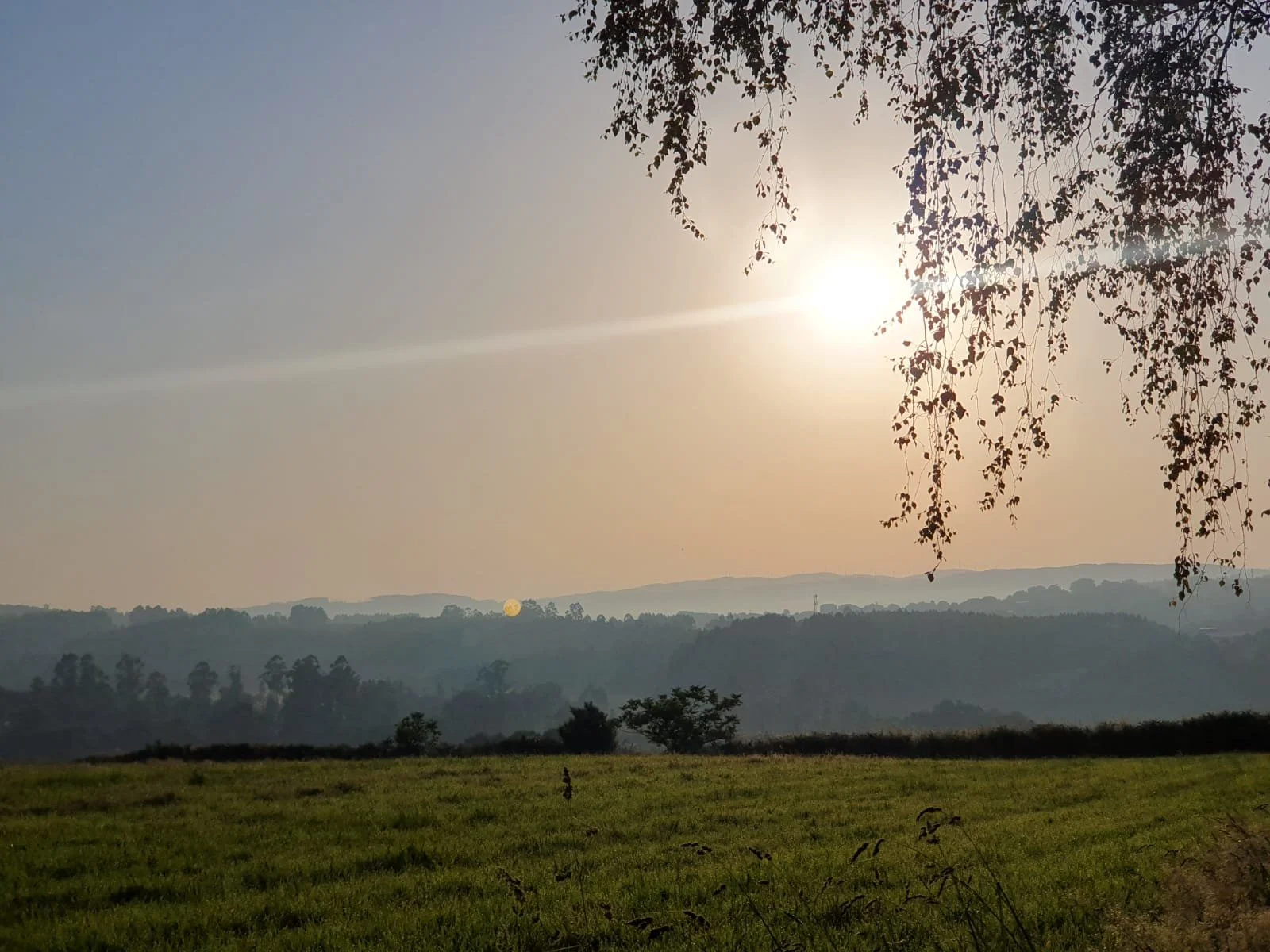
The Camino del Norte follows Spain’s rugged northern coastline, stretching from the Basque Country to Galicia along the Bay of Biscay. Known for its dramatic sea views, green hills, and rich regional culture, it offers a striking alternative to the more traditional inland routes.
This Camino is wilder and more physically demanding than routes like the Camino Francés or Portugués, with frequent hills and longer stages. In return, it rewards walkers with spectacular coastal scenery, quiet paths, and a strong sense of independence. The route passes through vibrant cities such as San Sebastián and Bilbao, fishing villages, cliff-top trails, and peaceful rural landscapes before eventually turning inland to join the Camino Primitivo near Arzúa for the final approach to Santiago.
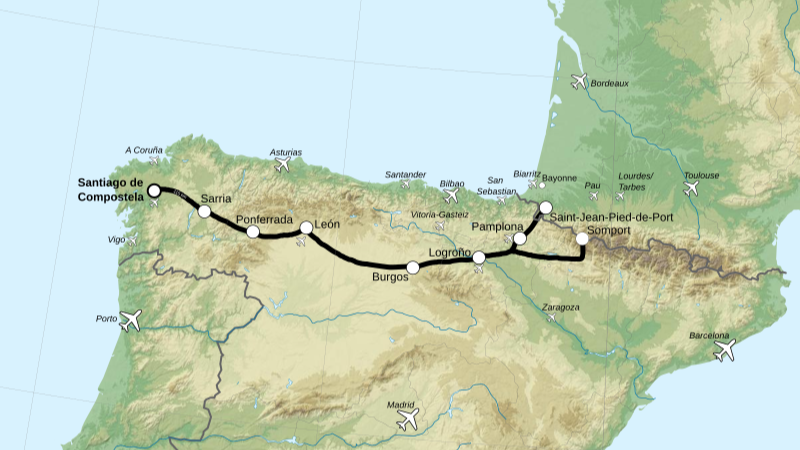
🗺️ Key Facts at a Glance
Total Distance: 90km (Finisterre) 85km (Muxia) 29km (Finisterre to Muxia)
Historic Starting Point: Santiago de Compostela
Ending Point: Finisterre or Muxia
Average Duration: 3-5 days
Difficulty: Moderate (rolling terrain with some hill sections)
Best Season to Walk: April to October
Why Choose the Camino del Norte?
If you’re looking for a Camino that blends the spirit of pilgrimage with dramatic coastal landscapes and rich regional culture, the Camino del Norte is a compelling choice. Following Spain’s northern coastline, this route is shaped by the rhythm of the sea — passing rugged cliffs, quiet beaches, green hills, and distinctive coastal towns.
More challenging and less crowded than the Camino Francés, the Camino del Norte offers a stronger sense of solitude and adventure. It rewards pilgrims with ever-changing scenery, exceptional local cuisine, and a deeper connection with nature. Starting in places like Irún or San Sebastián, the journey unfolds through the Basque Country, Cantabria, Asturias, and Galicia before turning inland toward Santiago de Compostela.
It’s ideal for:
Pilgrims seeking a more physically demanding and rewarding Camino
Those drawn to dramatic coastal scenery and wild landscapes
Walkers who prefer a quieter route with fewer crowds
Experienced pilgrims looking for a different Camino experience
History of the Camino del Norte
The Camino del Norte is one of the oldest pilgrimage routes to Santiago de Compostela, developing during the early centuries of the Christian pilgrimage tradition. As devotion to St James spread following the discovery of his tomb in the 9th century, pilgrims began travelling along Spain’s northern coastline, using existing Roman roads, coastal paths, and trade routes that connected the Bay of Biscay with Galicia.
In the early Middle Ages, the Camino del Norte was often considered the safest route to Santiago. Inland regions were frequently affected by conflict and instability, while the northern coast offered relative security and well-established settlements. As a result, kings, nobles, monks, and everyday pilgrims journeyed through the Basque Country, Cantabria, and Asturias, supported by a growing network of monasteries, churches, and pilgrim hospitals built to provide shelter and care.
During the medieval golden age of pilgrimage, the Camino del Norte flourished as a major artery of the Camino network. Coastal towns and ports played an important role in welcoming pilgrims arriving by land and sea, and the route became known for its cultural diversity and strong regional identities.
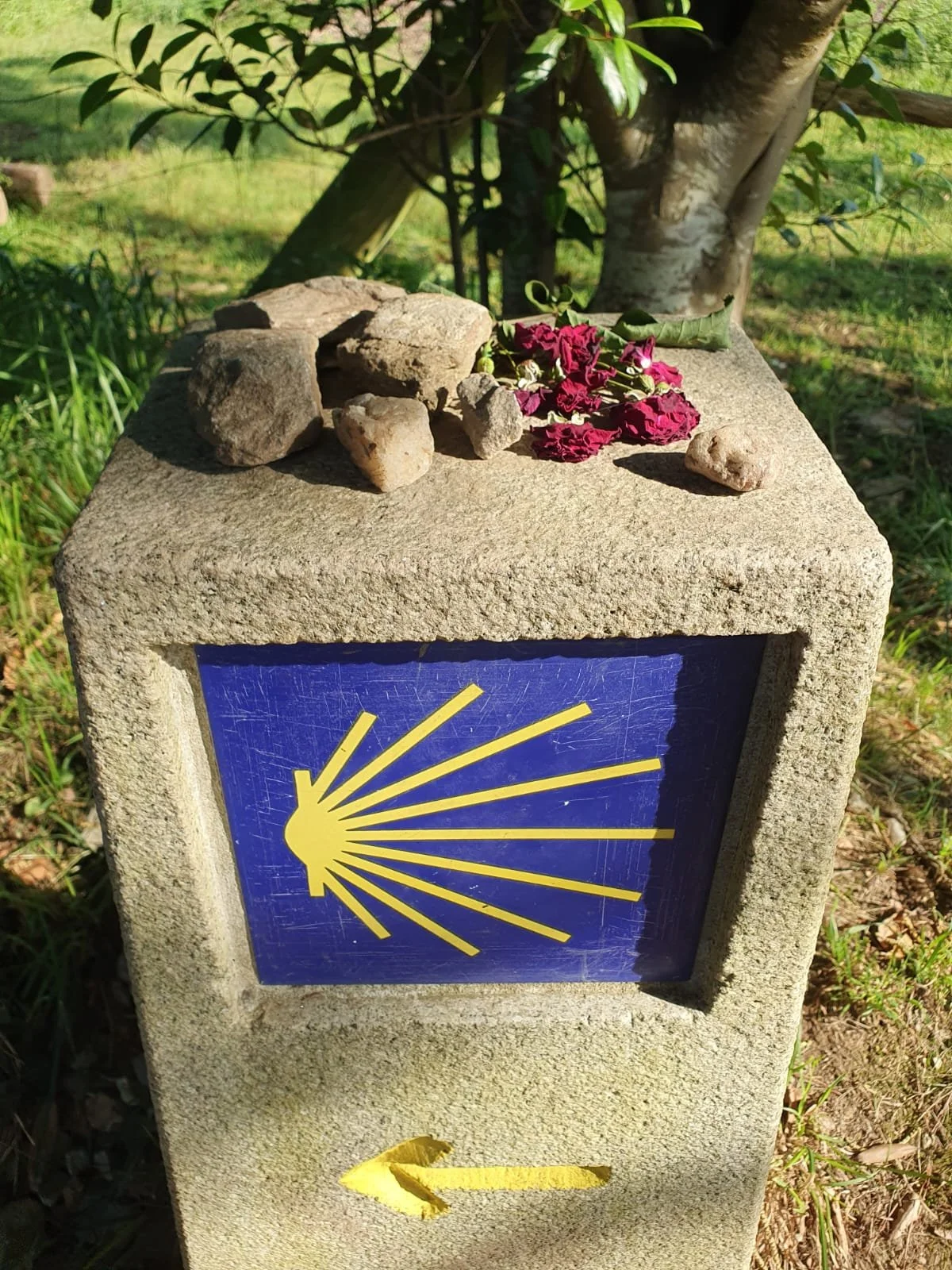
Over time, political changes, improved safety inland, and the rise of alternative routes — particularly the Camino Francés — led to a gradual decline in the Camino del Norte. In recent decades, however, the route has experienced a renewed revival. Historic paths have been restored, waymarkers replaced, and albergues reopened, allowing modern pilgrims to once again follow this dramatic coastal Camino — a journey shaped by the sea, history, and the enduring pull of Santiago de Compostela.
Highlights Along the Way
San Sebastián (Donostia): A stunning coastal city and popular starting point for the Camino del Norte, known for its beautiful bay, elegant architecture, and world-class food scene.
Bilbao: A vibrant cultural hub where modern design meets Basque tradition, offering a memorable blend of art, history, and gastronomy along the route.
Santillana del Mar: One of Spain’s best-preserved medieval towns, with cobbled streets and stone buildings that feel frozen in time.
Gijón: A lively Asturian city with a strong maritime heritage, seafront promenades, and a warm pilgrim welcome.
Avilés: A charming historic port with a beautifully preserved old quarter and a relaxed pace that suits Camino life.
Ribadeo: The gateway into Galicia, close to dramatic coastal scenery and the famous beaches of the Cantabrian coast.
Arzúa: Where the Camino del Norte meets the Camino Francés, bringing a renewed sense of community for the final approach to Santiago.
Saint-Jean-Pied-de-Port
Pamplona
Elevation Profile
Burgos
Leon
Santiago de Compostela
Sarria

The Camino del Norte in Shorter Stages
Walking the full Camino del Norte usually takes around 35 to 40 days, with daily distances that often feel more demanding due to frequent hills and elevation changes. Many pilgrims choose to walk the route in shorter stages over multiple trips, allowing them to enjoy the scenery and recover between sections. Popular stage breakdowns include:
Irún → Bilbao (150 km / 7–9 days)
The Camino del Norte begins at the French–Spanish border in Irún, immediately introducing walkers to the green hills and coastal air of the Basque Country. Early stages pass through fishing villages, cliff-top paths, and lively seaside towns such as San Sebastián. The walking is challenging but spectacular, with constant views of the Bay of Biscay. This section ends in Bilbao, where modern architecture and traditional Basque culture meet — a rewarding place to pause and explore.
Bilbao → Santillana del Mar (130 km / 6–7 days)
Leaving Bilbao, the route continues through rolling countryside and quiet coastal stretches as you cross into Cantabria. This section blends rural walking with historic towns, traditional villages, and long green valleys. Santillana del Mar, often described as one of Spain’s most beautiful medieval towns, makes a memorable stopping point, with its cobbled streets and timeless atmosphere.
Santillana del Mar → Gijón (170 km / 8–10 days)
This stretch carries pilgrims deeper along the northern coast, passing through quieter landscapes and into Asturias. Expect a mix of inland paths, coastal viewpoints, and long, steady climbs. The food changes subtly here — cider houses replace wine bars, and seafood features heavily. Gijón offers a lively and welcoming break, with beaches, promenades, and a strong pilgrim tradition.
Gijón → Ribadeo (150 km / 7–9 days)
One of the most scenic sections of the Camino del Norte, this part of the route weaves through green hills, eucalyptus forests, and quiet villages before crossing into Galicia. The terrain remains demanding, but the rewards are constant: sea views, dramatic cliffs, and a sense of walking through wild, open country. Ribadeo marks the gateway into Galicia and a noticeable shift in landscape and Camino culture.
Ribadeo → Arzúa (130 km / 6–7 days)
From Ribadeo, the Camino gradually turns inland. The path becomes quieter and more rural, passing through small Galician villages, forest tracks, and farmland. This section feels calmer and more introspective, with fewer walkers and a slower rhythm. In Arzúa, the Camino del Norte joins the Camino Francés, bringing a renewed sense of energy and community.
Arzúa → Santiago de Compostela (40 km / 2–3 days)
The final approach to Santiago follows the well-trodden paths of the Camino Francés. Woodland trails, small villages, and familiar pilgrim rituals build anticipation with each step. After weeks along the coast, arriving in Santiago de Compostela carries a unique sense of achievement — shaped by hills, sea air, and the diverse cultures of northern Spain.
Accommodation & Support
On both the full Camino Francés and the final 100km, you’ll find a range of accommodation — from traditional albergues to comfortable hotels and private rooms.
At Camigo Travel, we take care of all the details:
Hand-picked accommodation
Daily luggage transfers
Route notes and pilgrim passport
24/7 customer support
So you can focus on walking, connecting, and enjoying every step of your Camino.
FAQs
Q: How long does it take to walk the Camino del Norte?
A: Walking the full Camino del Norte takes around 35 to 40 days, covering approximately 820 km from Irún to Santiago de Compostela. Daily distances can feel more demanding than other routes due to frequent hills and elevation changes. Many pilgrims choose to walk the Camino del Norte in shorter stages over multiple trips.
Q: When is the best time of year to walk the Camino del Norte?
A: The ideal months are May–June and September, when temperatures are mild and accommodation is easier to find. July and August are popular but can be busy, especially in coastal towns during holiday season. Spring and autumn offer beautiful scenery, though weather can be changeable. Winter walking is possible but not recommended for most pilgrims due to rain and limited services.
Q: Is the Camino del Norte suitable for beginners?
A: The Camino del Norte is more challenging than routes like the Camino Francés or Portugués. It includes frequent climbs and descents, longer stages, and fewer services in some areas. It’s best suited to experienced walkers or pilgrims who are physically prepared and comfortable with sustained daily walking.
Q: Is the Camino del Norte suitable for beginners?
A: The Camino del Norte is more challenging than most other Camino routes, with frequent hills and longer, tougher stages. While fit and well-prepared beginners can walk it successfully, it’s generally better suited to experienced walkers or those comfortable with sustained daily hiking. Many first-time pilgrims choose to walk a shorter section rather than the full route.
Q: Where do pilgrims stay each night?
A: Accommodation, if you book a package with us, is with friendly, local hotels. We arrange hand-picked accommodation that balances comfort and authenticity — always with a warm welcome at the end of each day’s walk
Q: Can I have my luggage transferred?
A: Yes — luggage transfer is available along the entire Camino Francés. Your main bag is collected each morning and delivered to your next accommodation, so you only walk with a small daypack. This makes the journey much more comfortable and is included in our Camino packages.
Q: Do I need to speak Spanish?
A: Not necessarily. Knowing a few simple phrases helps, but most accommodation hosts, restaurants, and transport providers are used to pilgrims and speak at least some English. The Camino is well-signed, and gestures, smiles, and “Buen Camino!” go a long way.
Q: What should I pack?
A: Pack light. The essentials include comfortable walking shoes, layered clothing, a rain jacket, and a good backpack. We send all our clients a detailed packing list before departure, so you’ll know exactly what to bring and what to leave behind.
Q: Do I get a certificate at the end?
A: Yes! If you walk at least 100 km on foot (or cycle 200 km) and collect two stamps per day in your pilgrim passport, you can receive the Compostela certificate in Santiago. It’s a beautiful keepsake that marks your achievement and journey.
Q: Can you help plan part of the Camino, not the whole thing?
A: Absolutely. Many pilgrims walk the Camino in stages — for example, Burgos to León or just the final 100 km. We can plan any section for you, including accommodation, luggage transfers, and detailed route notes, all tailored to your timeframe and walking style.
Start Your Camino del Norte Adventure
Whether you dream of walking the entire route or just the final 100km, the Camino Portugués is a journey that stays with you for life.
Let us plan your perfect Camino — tailored to your pace, comfort, and purpose.
👉 Start your Camino today and experience the magic of the world’s most famous pilgrimage route.