El Camino Francés
Walk the legendary heart of the Camino.
Overview
The Camino Francés is the most iconic and popular of all the Camino de Santiago routes. Spanning approximately 780 km, it begins in the French town of Saint-Jean-Pied-de-Port and crosses northern Spain to reach the magnificent Cathedral of Santiago de Compostela.
For centuries, millions of pilgrims have walked this path — drawn by its mix of stunning landscapes, rich history, cultural variety, and a deep sense of community. It’s the route that best captures the spirit of the Camino: a journey of both outer adventure and inner reflection.
🗺️ Key Facts at a Glance
Total Distance: 780 km
Historic Starting Point: Saint-Jean-Pied-de-Port (France)
Ending Point: Santiago de Compostela (Spain)
Average Duration: 30–35 days (walking the full route)
Difficulty: Moderate (challenging start, gentle middle stages)
Best Season to Walk: April – October
Why Choose the Camino Francés?
The Camino Francés offers everything that makes the Camino experience unforgettable. It’s the best-marked and most social route, with excellent infrastructure and a lively pilgrim community. You’ll meet walkers from all over the world and experience the perfect mix of challenge, comfort, and connection. The Last 100km from Sarria is the most popular and camino route and perfect for those looking for a lively experience.
It’s ideal for:
First-time pilgrims wanting the “classic” Camino
Those seeking history, culture, and variety
Travellers who enjoy a strong sense of camaraderie on the trail
History of the Camino Francés
The Camino Francés is the most famous and historic of all the Camino de Santiago routes. Its story stretches back over a thousand years, to the early Middle Ages, when pilgrims began travelling across Europe to visit the tomb of St James the Apostle in Santiago de Compostela.
According to tradition, the remains of St James were discovered in Galicia in the 9th century. News of the discovery spread quickly, and by the 10th century, Santiago had become one of the three great Christian pilgrimage destinations — alongside Jerusalem and Rome. From that point on, people of all backgrounds set out on foot across Europe to reach “the Field of Stars” (Compostela), guided by faith, adventure, or a search for meaning.
The main route through northern Spain developed naturally, following old Roman roads and trade paths. It became known as the Camino Francés — the “French Way” — because so many early pilgrims came from France and entered Spain through the Pyrenees. Medieval towns grew along the path to welcome them, with monasteries, bridges, hospitals, and churches built to serve travellers.
During its peak in the 12th and 13th centuries, the Camino bustled with thousands of pilgrims each year. The route was celebrated in the Codex Calixtinus, a medieval guidebook that described the journey from Saint-Jean-Pied-de-Port to Santiago, much like modern guidebooks do today. Over time, however, wars, political changes, and new travel routes led to centuries of decline, and the Camino nearly faded from memory.
In the 20th century, a quiet revival began. Local communities restored old paths, the Church renewed interest in the pilgrimage, and writers and travellers rediscovered its meaning. When UNESCO declared the Camino Francés a World Heritage Site in 1993, it confirmed the route’s cultural and spiritual importance.
Today, the Camino Francés is a living tradition — a path where medieval history and modern life meet. Pilgrims from all over the world walk the same trails used for centuries, crossing mountains, plains, and valleys toward Santiago de Compostela. Whether walked for faith, reflection, or adventure, it remains one of the world’s great journeys — timeless, communal, and deeply human.
Highlights Along the Way
Saint-Jean-Pied-de-Port: A picturesque French Basque town and the traditional starting point.
Pamplona: Famous for its city walls, cathedral, and the Running of the Bulls festival.
Logroño: Capital of La Rioja wine region — perfect for tapas and local red wine.
Burgos: Home to one of Spain’s most magnificent Gothic cathedrals.
León: A lively, historic city with stunning architecture and great food.
O Cebreiro: A magical mountain village marking the entrance into Galicia.
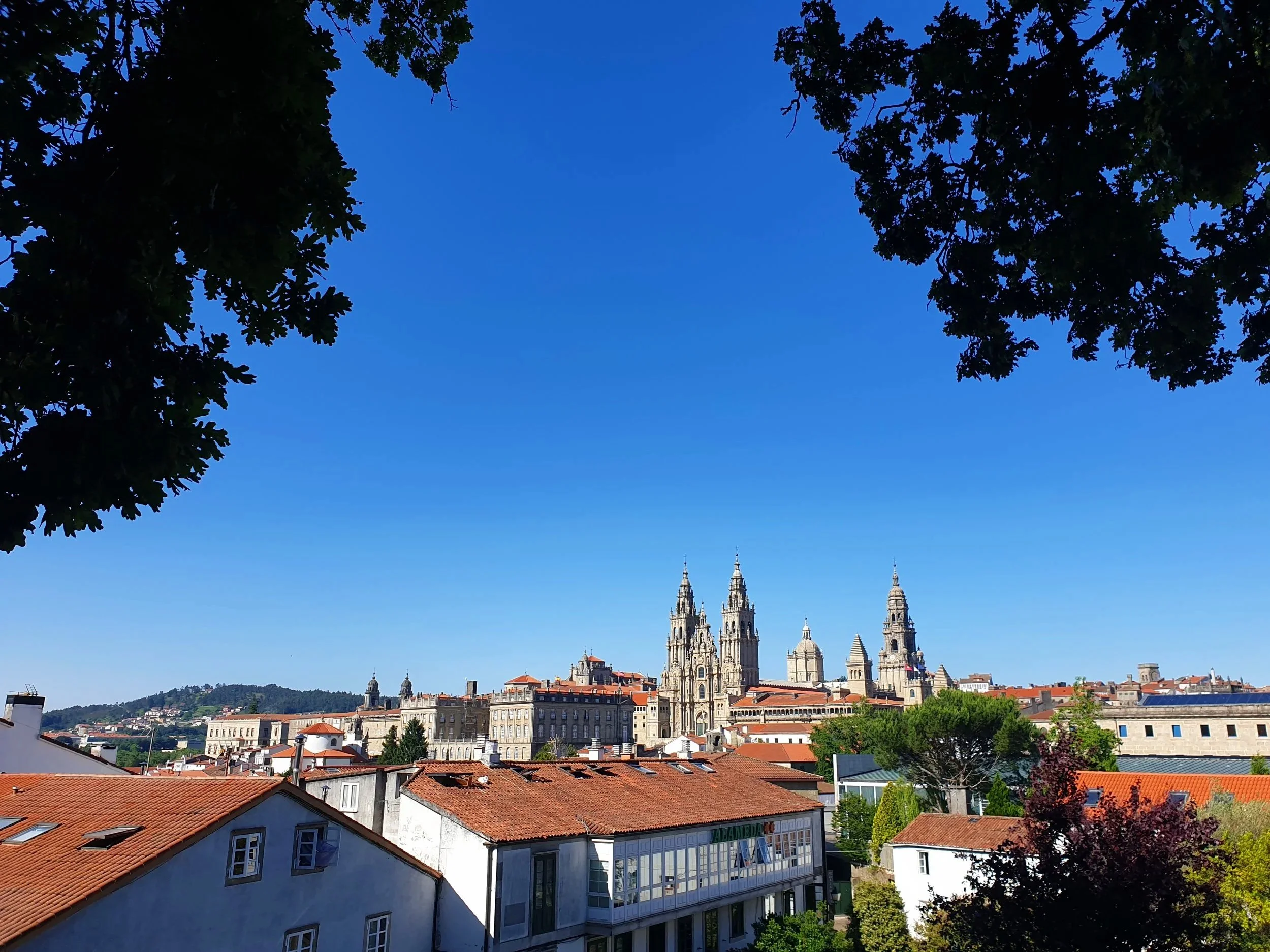
Santiago de Compostela: The emotional finale, where pilgrims gather at the Cathedral to celebrate their journey.
Saint-Jean-Pied-de-Port
Pamplona
Elevation Profile
Burgos
Leon
Santiago de Compostela
Sarria
The Francés in Shorter Stages
Walking the full Camino Francés usually takes around 30 to 35 days, covering an average of 20–25 km per day. This can be broken down into some shorter stages, so you can walk the entire camino but over multiple trips. These stages include:
Saint-Jean-Pied-de-Port → Pamplona (70 km / 3–4 days)
The Camino starts in the little Basque town of Saint-Jean-Pied-de-Port, where the cobbled streets hum with pre-departure nerves and excitement. The first day over the Pyrenees is steep but unforgettable — sheep-dotted meadows, sweeping views, and a real sense of pilgrimage as you cross into Spain. After the descent through forest and quiet hamlets, the path winds towards Pamplona, a lively city where many pilgrims take their first rest day.
Pamplona → Logroño (90 km / 4–5 days)
Leaving Pamplona behind, the Camino climbs to the Alto del Perdón, marked by its famous pilgrim statue and a view that stretches for miles. The trail leads through rolling farmland, vineyards, and villages that feel untouched by time. Towns like Puente la Reina and Estella are full of Camino history — old bridges, stone churches, and cafés that have welcomed pilgrims for centuries. The section ends in Logroño, the capital of La Rioja, where an evening of tapas and local wine feels almost like a rite of passage.
Logroño → Burgos (120 km / 5–6 days)
From the vineyards of Rioja, the land opens up into the broad fields of Castilla. You’ll walk past small towns, quiet monasteries, and long stretches of open countryside. Pilgrims often describe this part as gentle but reflective — the kind of walking where thoughts wander as easily as the trail. The city of Burgos makes a spectacular finish to this stage, with its magnificent Gothic cathedral and lively old quarter.
Burgos → León (180 km / 8–9 days)
This is the stretch across the Meseta, the high plateau of central Spain. The walking is mostly flat, the horizons wide, and the days long and peaceful. There’s a rhythm to it — villages appearing in the distance, sunrises over wheat fields, shared quiet with other pilgrims. Some people find this section meditative; others find it challenging in its monotony. Either way, it’s an essential part of the Camino experience. The arrival in León, with its golden stone streets and soaring cathedral, feels like a reward after days of stillness.
León → Ponferrada (100 km / 5–6 days)
Leaving León, the landscape begins to rise again. You’ll pass through Astorga, with its Gaudí-designed palace, then climb gently into the Montes de León. The scenery becomes greener, dotted with small villages and vineyards. The descent into Ponferrada brings you to the Bierzo valley, known for its fruit orchards, chestnut trees, and the striking Templar castle that guards the town.
Ponferrada → Sarria (90 km / 4–5 days)
From Ponferrada, the trail threads through rural countryside before tackling the steady climb to O Cebreiro, one of the Camino’s most memorable spots. This tiny mountain village, with its round stone houses and misty views, feels ancient and almost otherworldly. From here, the path descends into Galicia — a land of green valleys, damp forests, and a softer light. It’s a beautiful and peaceful walk to Sarria, where many new pilgrims join the route.
Sarria → Santiago de Compostela (115 km / 5–7 days)
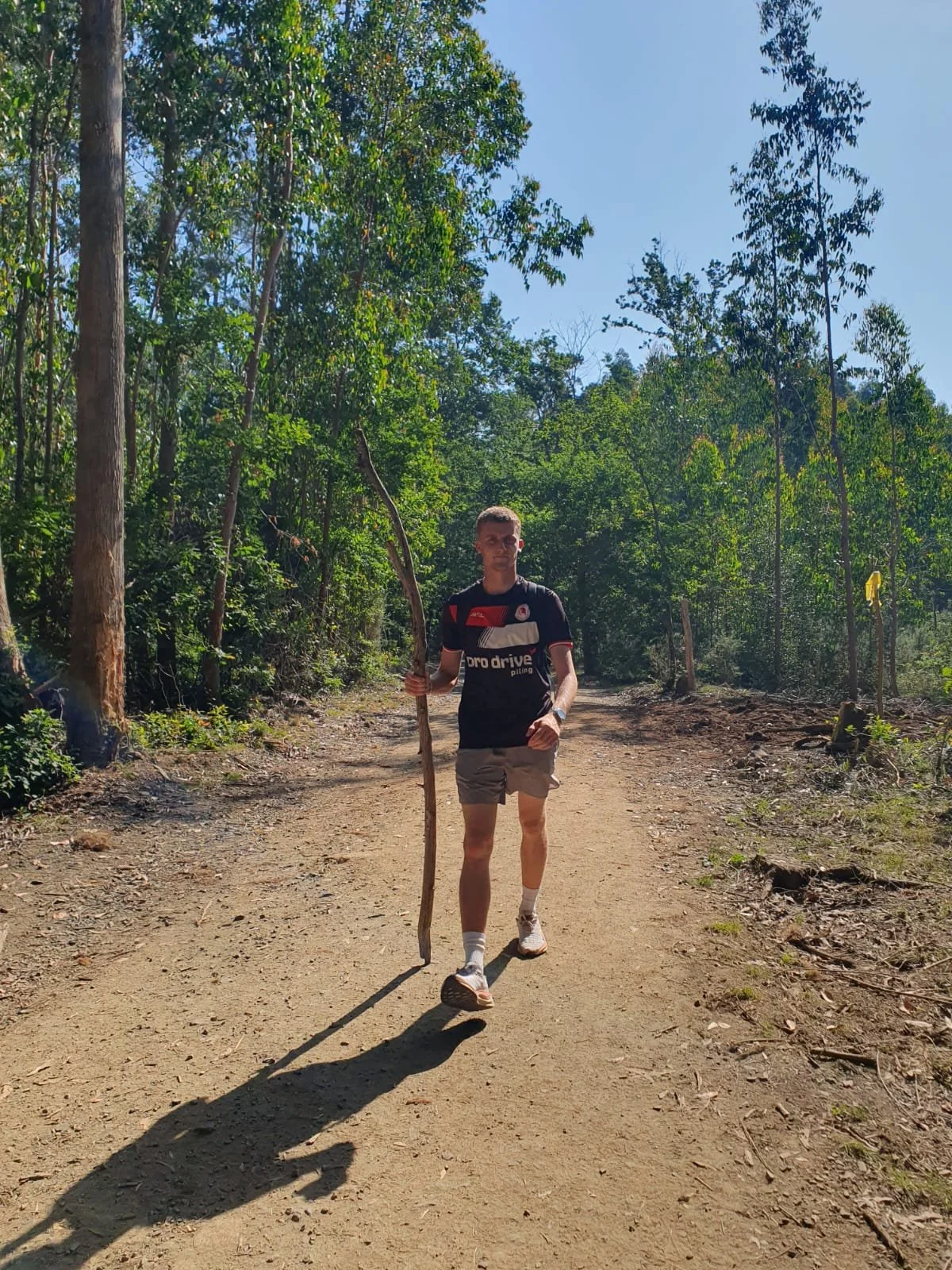
This final stage is the most walked part of the Camino Francés. Beginning in Sarria, it’s the minimum distance needed to earn the Compostela certificate, but it’s much more than that. The days roll gently through woodland paths, farm tracks, and lively pilgrim towns. The atmosphere builds with each step, a mix of excitement, reflection, and companionship. Finally, the spires of Santiago de Compostela appear — and whether you arrive alone, with friends, or among strangers who’ve become family, the sense of arrival is something words can’t quite capture.
The Final 100km: Sarria to Santiago de Compostela
The last 100km of the Camino Francés, from Sarria to Santiago, is the most popular section of the entire Camino — and for good reason. It’s the minimum distance required to earn the Compostela, the official pilgrim certificate issued in Santiago.
Why So Many Pilgrims Choose This Section
It offers a perfect introduction to the Camino for those with limited time.
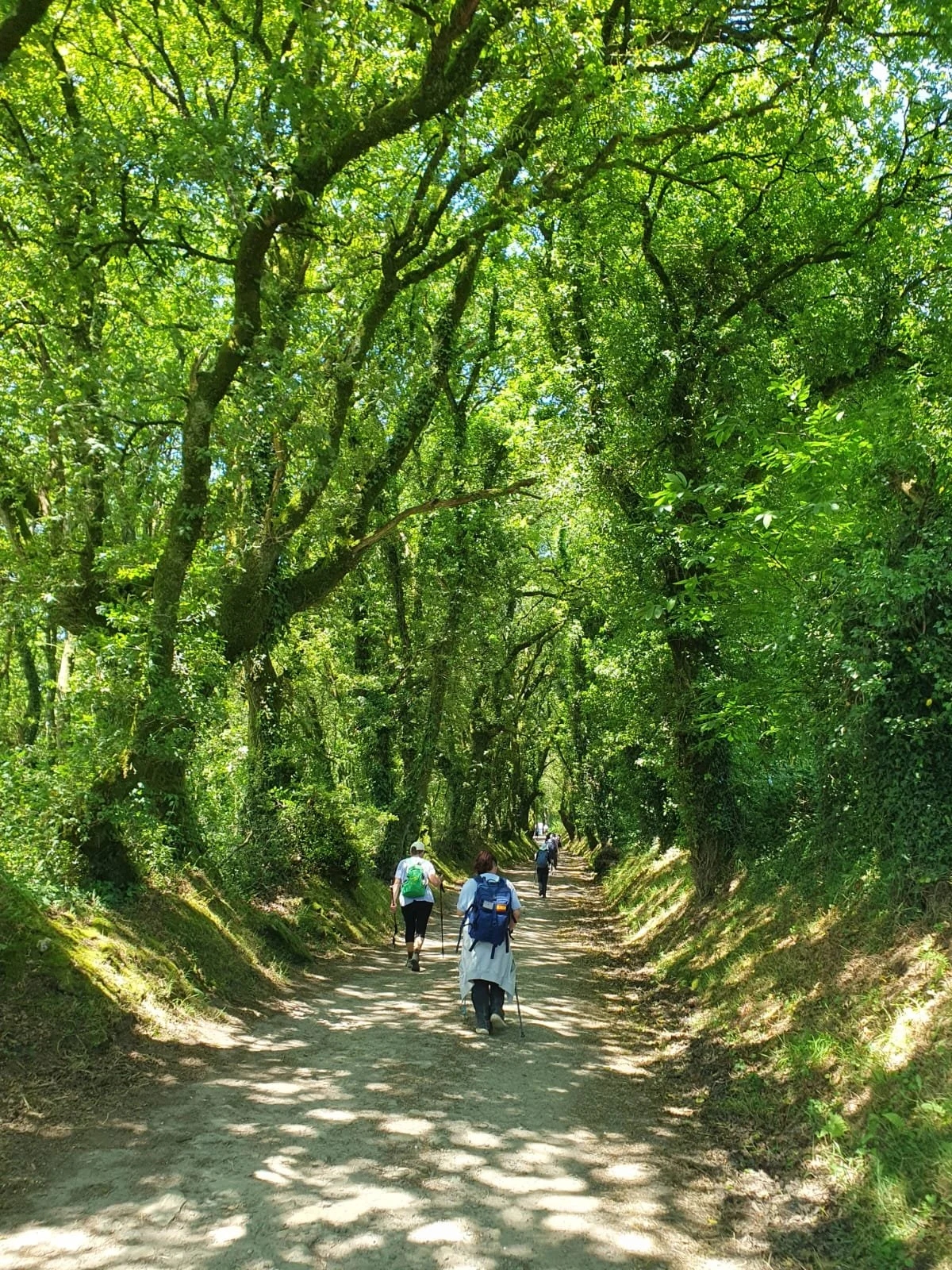
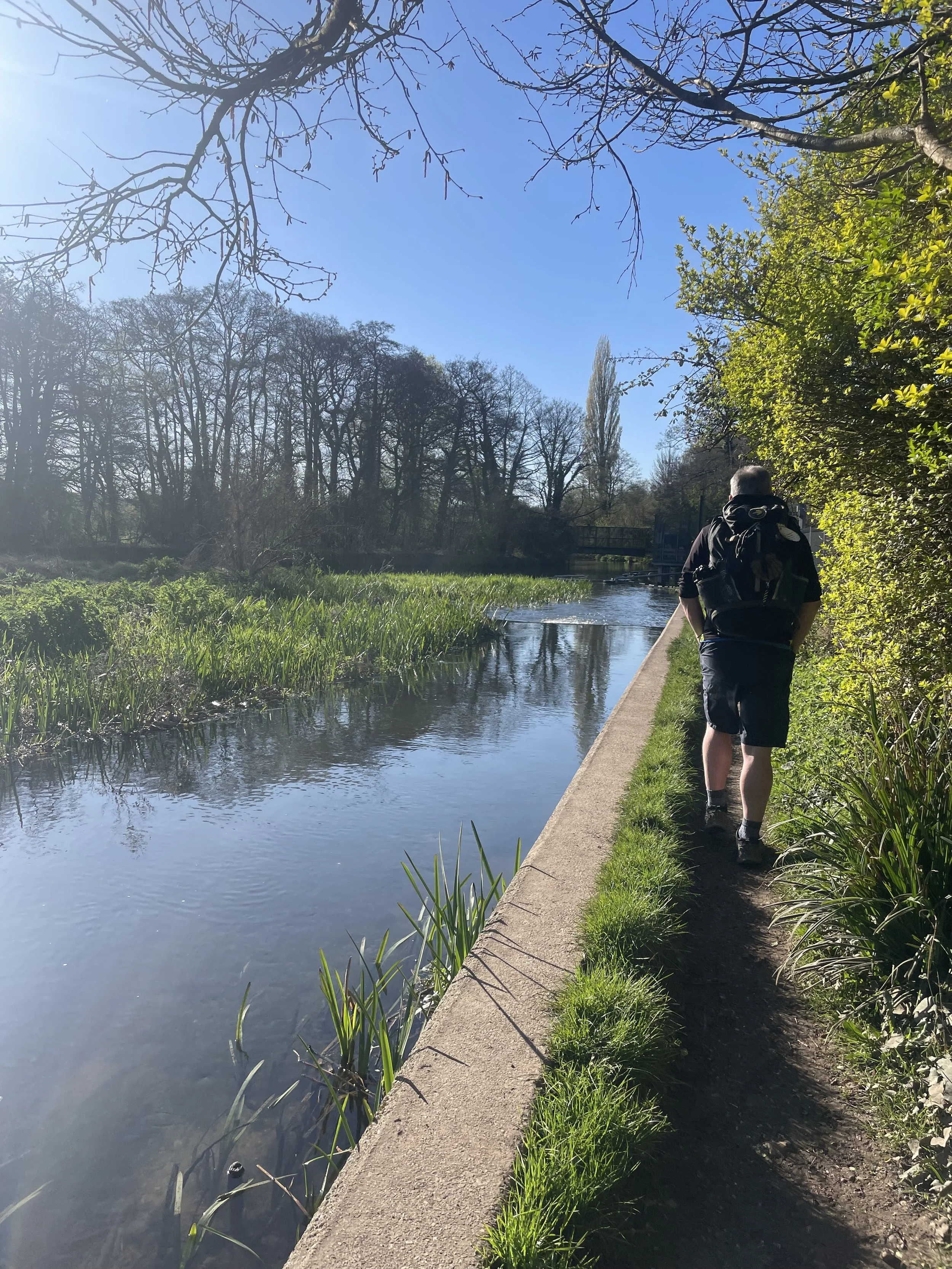
The route passes through lush Galician countryside, ancient stone villages, and tranquil forests.
It’s rich in history and tradition, yet accessible for all levels of fitness.
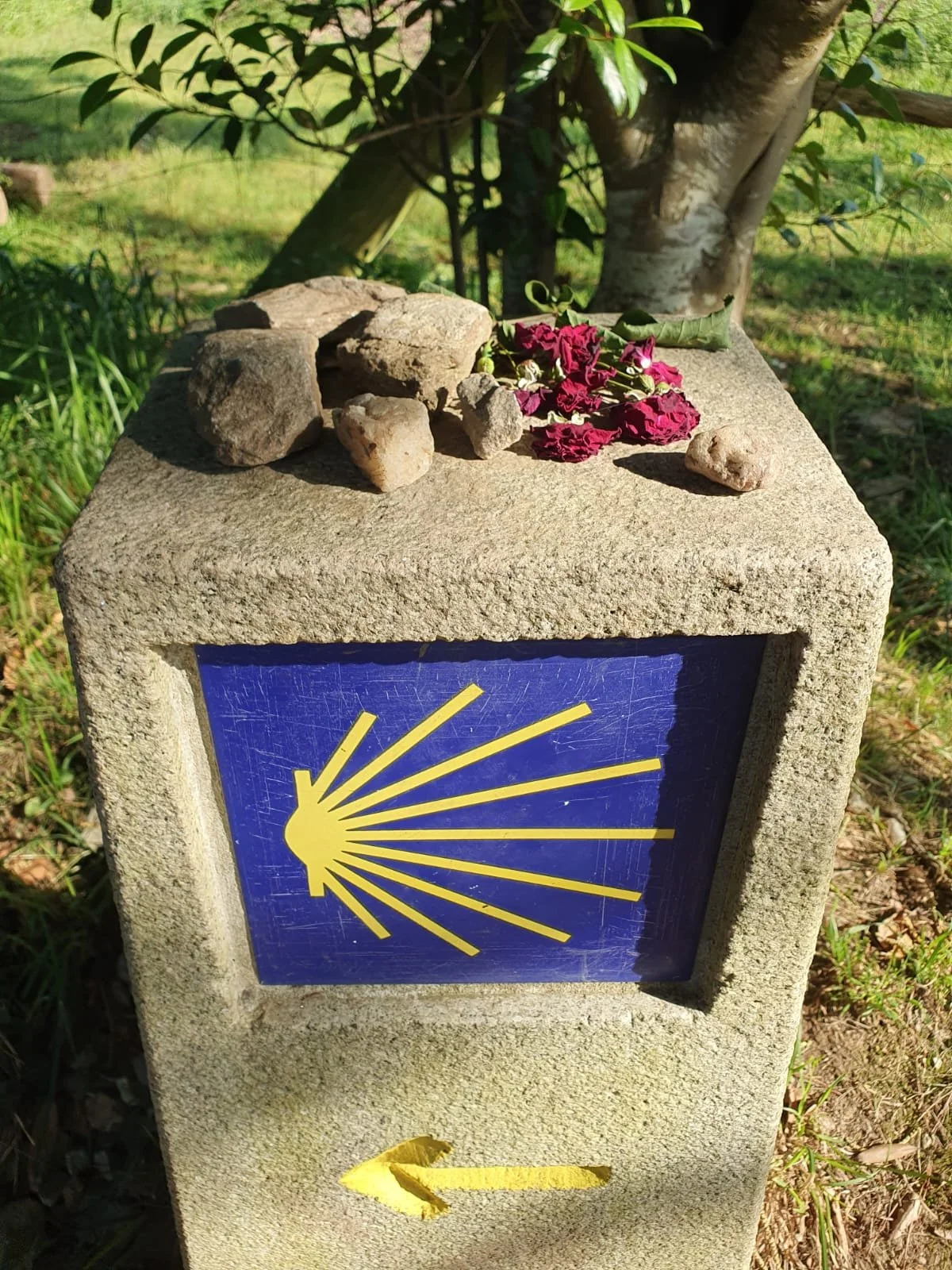
Excellent facilities — cozy accommodation, cafés, and well-marked paths — make it ideal for a first Camino.
FAQs
Q: How long does it take to walk the Camino Francés?
A: The full Camino Francés is about 780 km from Saint-Jean-Pied-de-Port to Santiago de Compostela. Most people take around 30 to 35 days to walk the entire route, averaging 20–25 km per day. If you only have a week, many choose to start in Sarria and walk the final 100 km to Santiago, which takes about 5 to 7 days.
Q: When is the best time of year to walk the Camino?
A: The most popular times are spring (April–June) and autumn (September–October). The weather is generally mild, the countryside is at its best, and accommodation is easy to find. July and August can be very hot and busy, while winter months are quiet but bring colder weather and some closures.
Q: Do I need to be very fit to walk it?
A: You don’t need to be super fit, but a reasonable level of fitness helps. The Camino is a long-distance walk, not a race. With some preparation and realistic daily stages, almost anyone can complete it. We recommend building up to walking 15–25 km per day before your trip. The Pyrenees and Galicia are hillier, while the Meseta is mostly flat.
Q: Where do pilgrims stay each night?
A: Accommodation, if you book a package with us, is with friendly, local hotels. We arrange hand-picked accommodation that balances comfort and authenticity — always with a warm welcome at the end of each day’s walk.
Q: What is the ‘last 100 km’ and why is it so popular?
A: The final 100 km from Sarria to Santiago de Compostela is the minimum distance needed to earn the Compostela certificate. It’s the most popular stretch of the Camino, offering a great mix of countryside, villages, and pilgrim camaraderie. It’s ideal for first-time walkers and can be comfortably completed in five to seven days.
Q: Can I have my luggage transferred?
A: Yes — luggage transfer is available along the entire Camino Francés. Your main bag is collected each morning and delivered to your next accommodation, so you only walk with a small daypack. This makes the journey much more comfortable and is included in our Camino packages.
Q: Do I need to speak Spanish?
A: Not necessarily. Knowing a few simple phrases helps, but most accommodation hosts, restaurants, and transport providers are used to pilgrims and speak at least some English. The Camino is well-signed, and gestures, smiles, and “Buen Camino!” go a long way.
Q: What should I pack?
A: Pack light. The essentials include comfortable walking shoes, layered clothing, a rain jacket, and a good backpack. We send all our clients a detailed packing list before departure, so you’ll know exactly what to bring and what to leave behind.
Q: Do I get a certificate at the end?
A: Yes! If you walk at least 100 km on foot (or cycle 200 km) and collect two stamps per day in your pilgrim passport, you can receive the Compostela certificate in Santiago. It’s a beautiful keepsake that marks your achievement and journey.
Q: Can you help plan part of the Camino, not the whole thing?
A: Absolutely. Many pilgrims walk the Camino in stages — for example, León to Santiago or just the final 100 km. We can plan any section for you, including accommodation, luggage transfers, and detailed route notes, all tailored to your timeframe and walking style.
Accommodation & Support
On both the full Camino Francés and the final 100km, you’ll find a range of accommodation — from traditional albergues to comfortable hotels and private rooms.
At Camigo Travel, we take care of all the details:
Hand-picked accommodation
Daily luggage transfers
Route notes and pilgrim passport
24/7 customer support
So you can focus on walking, connecting, and enjoying every step of your Camino.
Start Your Camino Francés Adventure
Whether you dream of walking the entire route or just the final 100km, the Camino Francés is a journey that stays with you for life.
Let us plan your perfect Camino — tailored to your pace, comfort, and purpose.
👉 Start your Camino today and experience the magic of the world’s most famous pilgrimage route.